Closed Comedones: What in Your Skincare Routine Could Be Causing Them?
Your skin seems perfectly fine: hardly any active breakouts, no noticeable redness. But as soon as you step closer to a window, tiny bumps become visible on your forehead, chin, or cheeks...

10/14/2026
Article content1. What Are Closed Comedones?2. Closed Comedones, Open Comedones, or Sebaceous Filaments?3. Closed Comedones4. Open Comedones5. Sebaceous Filaments6. What in Your Skincare Routine Can Contribute to Closed Comedones?7. 1. Overly Heavy Oils and Butters8. 2. A Highly Occlusive Formula9. 3. Insufficient Evening Cleansing10. 4. Overly Aggressive Cleansing11. 5. Overly Rich Moisturizing12. 6. Products Containing Denatured Alcohol13. Why Do Closed Comedones Appear on the Forehead, Chin, and Cheeks?14. Closed Comedones: How to Get Rid of Them and Adjust Your Skincare Routine15. Switch to a Thoughtful Evening Cleansing Routine16. Add Salicylic Acid (BHA)17. Consider Retinoids18. Choose Lighter Textures19. Products for Closed Comedones at Ksisters20. Conclusion
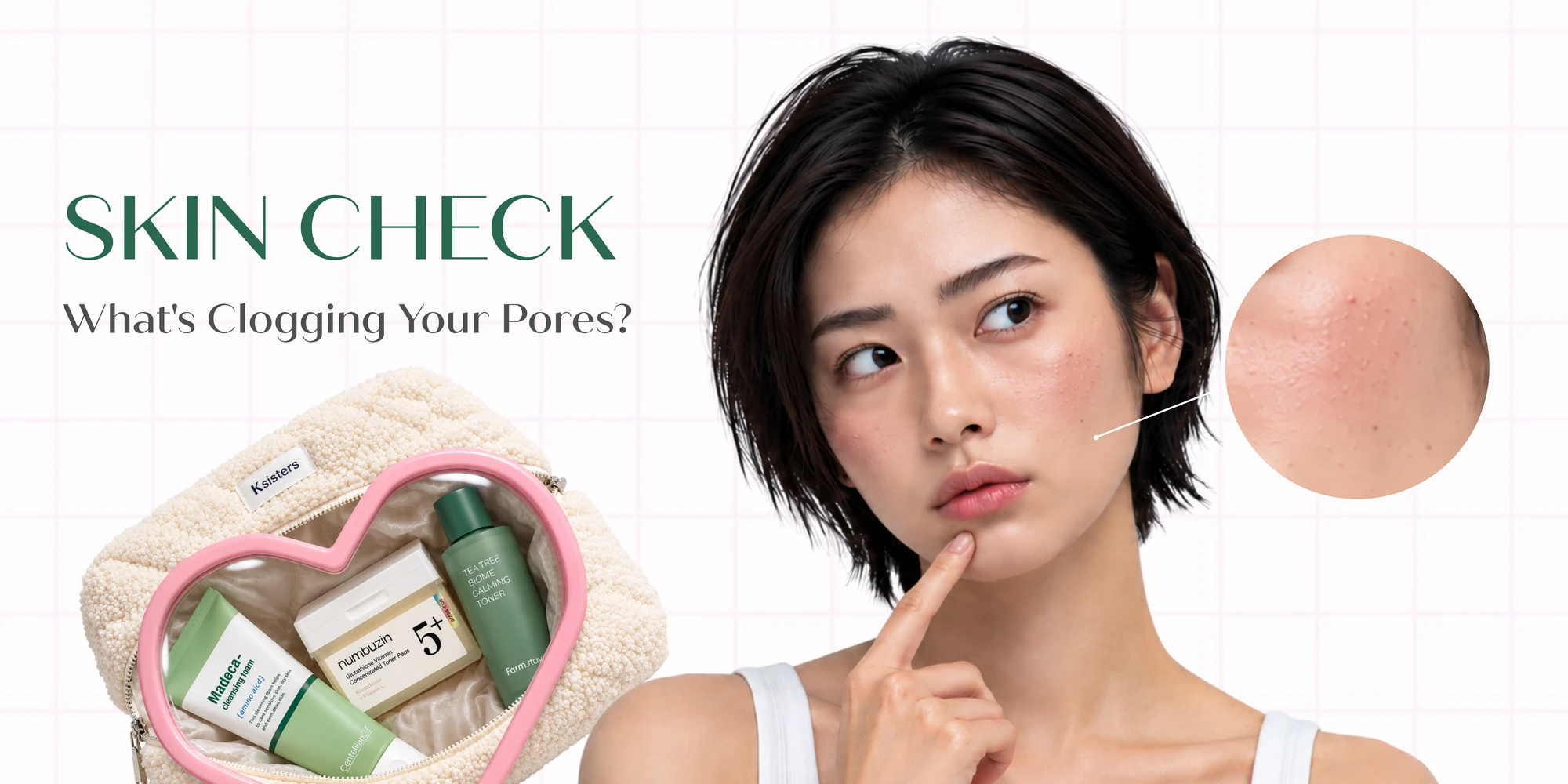
Your skin seems perfectly fine: hardly any active breakouts, no noticeable redness. But as soon as you step closer to a window, tiny bumps become visible on your forehead, chin, or cheeks. And instead of hiding them, your foundation seems to emphasize the uneven texture even more. Sound familiar? 👀
This is what closed comedones can look like. And before declaring war on every pore, it's worth taking another look at what's already sitting on your beauty shelf.
Comedones can have different causes: individual skin characteristics, hormonal changes, or excessive sebum production. But sometimes your skincare routine can also contribute — for example, overly rich textures, insufficient cleansing, or going overboard with active ingredients.
Let's figure it out without rushing or making the drastic decision to "replace every product" ✨
What Are Closed Comedones?
Let's start with the basics: comedones form when sebum and dead skin cells accumulate inside a hair follicle, gradually clogging it.
If this buildup remains beneath a thin layer of skin, a closed comedone forms. It usually looks like a small skin-colored or whitish bump without significant redness.
You can think of it as a clogged follicle in "sleep mode": there's no inflammation at the moment, but the comedone has already formed 😴 It can remain small and barely noticeable for a long time, although sometimes it may become inflamed.
It's important not to confuse closed comedones with milia. Milia are small cysts filled with keratin. They can also resemble tiny white bumps, but they develop differently. If you're unsure what's appeared on your skin, especially if the bumps don't disappear after adjusting your skincare routine, it's best to consult a dermatologist.
Closed Comedones, Open Comedones, or Sebaceous Filaments?
Not every tiny spot or uneven patch on your face means acne ☝️ It's especially easy to get confused when looking at your nose, forehead, or chin, where pores and sebaceous gland activity are more noticeable.
Closed Comedones
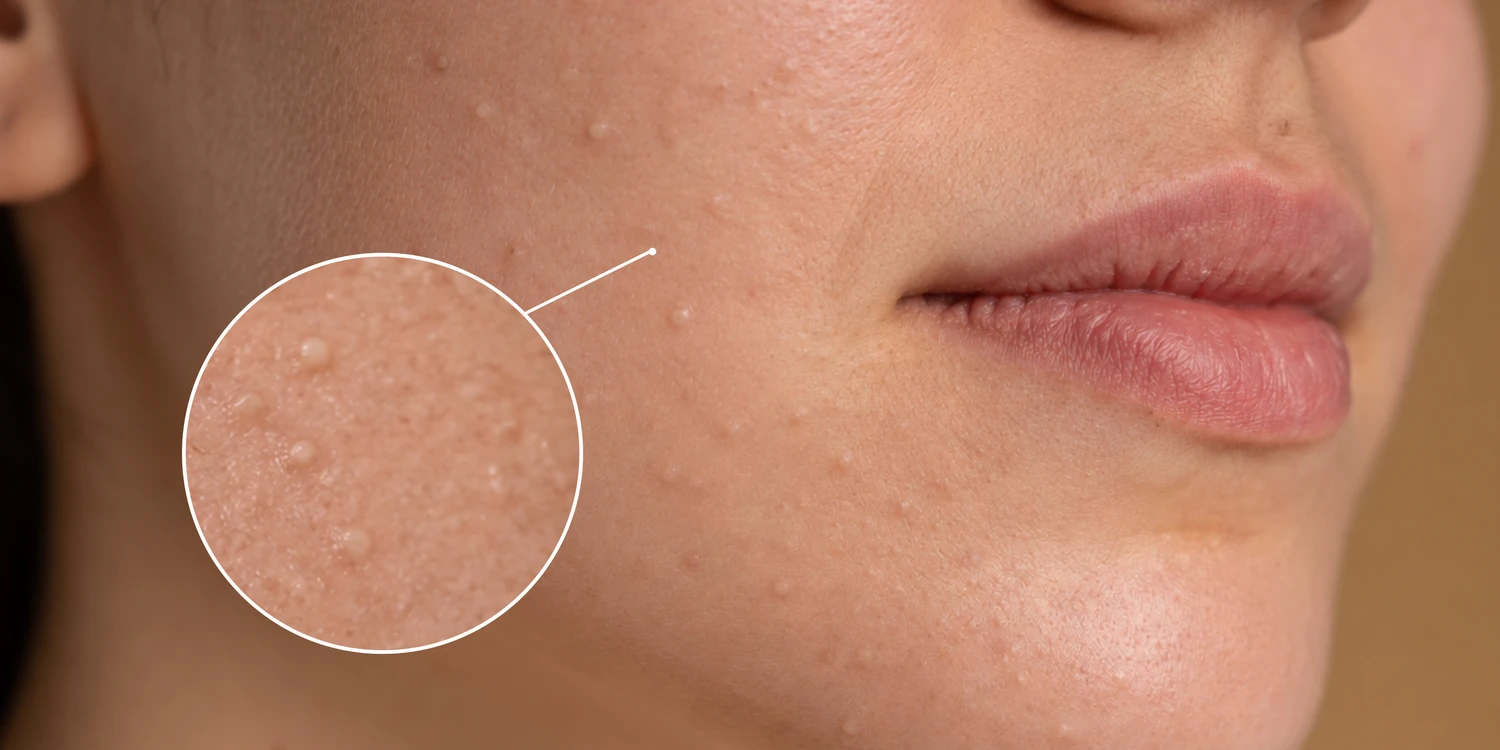
These are small skin-colored or whitish bumps that most commonly appear on the forehead, cheeks, and chin. Sebum and dead skin cells accumulate inside the follicle, but the blockage remains beneath the skin's surface.
That's why the comedone stays "closed" and may remain non-inflamed for a long time. It's worth reviewing your skincare routine: cleansing, the number of rich textures you use, and your active ingredients 🧴
Open Comedones
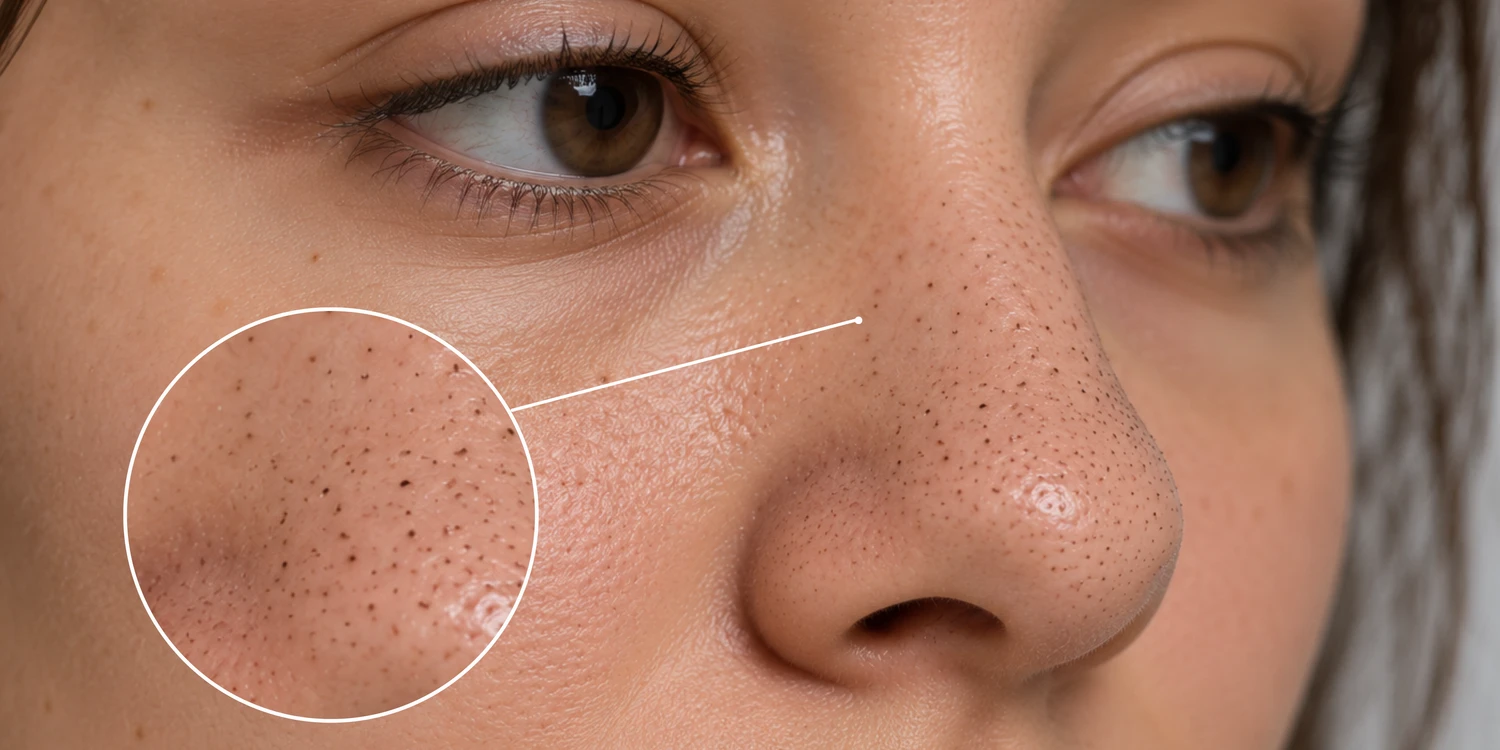
These are the familiar blackheads that often appear on the nose, forehead, and chin. They form in a similar way, but the contents of the comedone are exposed at the surface.
Their dark color is mainly associated with oxidation and the composition of the material at the surface. So blackheads aren't simply "dirt trapped in your pores" 🙅♀️
In your skincare routine, you can focus on gentle cleansing and active ingredients that help keep pores clear.
Sebaceous Filaments
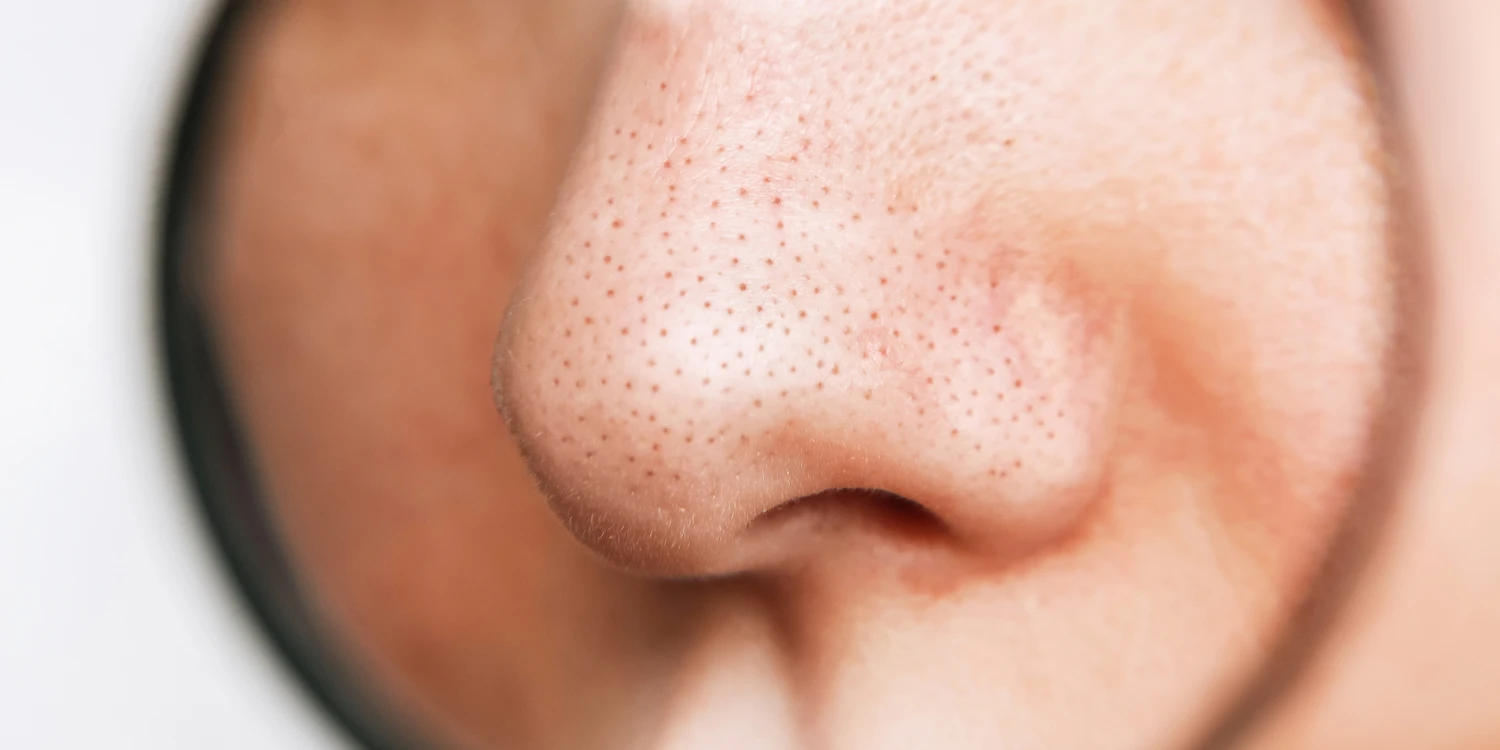
Sebaceous filaments, on the other hand, aren't a form of acne. They're a natural part of how your skin functions, helping sebum move from the sebaceous glands to the surface.
Sebaceous filaments usually look like tiny light-colored, grayish, or yellowish dots and are especially noticeable on the nose and in the T-zone.
There's no point trying to remove them permanently. After mechanical extraction, they gradually reappear, while constant squeezing can only irritate and damage your skin.
💡 So here's a simple guideline: a bump beneath the skin may be a closed comedone, a dark spot with an open surface may be an open comedone, and evenly distributed tiny dots on the nose are usually ordinary sebaceous filaments.
What in Your Skincare Routine Can Contribute to Closed Comedones?
Here's where things get interesting 👀 If the bumps appeared after you changed your routine, don't rush to look for the best treatment for closed comedones. First, think about what might have changed in your skincare.
One important thing to remember: comedones can rarely be blamed on one specific product or ingredient. However, certain skincare habits may contribute to clogged pores, especially if your skin is already prone to them.
1. Overly Heavy Oils and Butters
Coconut oil, wheat germ oil, shea butter, or cocoa butter can work wonderfully in one formula but may not suit your particular skin in another.
That's why comedogenicity shouldn't be treated as an absolute ingredient ranking. Even if an ingredient is considered potentially comedogenic, it doesn't necessarily mean it will clog your pores.
What matters is the ingredient's concentration, the product's complete formula, how much you apply, how often you use it, and your skin's individual characteristics.
If your skin texture gradually changed after switching to a very nourishing cream containing oils and butters, try returning to a lighter texture for a while and observe how your skin responds 🔎
2. A Highly Occlusive Formula
Silicones — such as Dimethicone or Cyclomethicone — are often found in primers, creams, and SPF products. The presence of silicones alone doesn't mean a product will necessarily be comedogenic.
However, a very rich, multi-layered routine may not suit skin prone to clogged pores. For example: serum + nourishing cream + rich SPF + primer + foundation 🧴
So don't judge a product by a single ingredient. Consider the entire formula and how your skin responds to your routine as a whole.
3. Insufficient Evening Cleansing
SPF, makeup, sebum, and pollution particles remain on your skin's surface throughout the day. That's why it's important to thoroughly remove everything you've applied to your skin in the evening 🛀
This is especially relevant for long-lasting makeup and water-resistant sunscreen.
For some people, double cleansing can be a convenient option: first, a cleansing oil or balm, followed by a gentle water-based cleanser.
But the rule that "absolutely everyone needs to double cleanse" doesn't work either. Consider what you've applied throughout the day and what your skin actually needs 💗
4. Overly Aggressive Cleansing
It seems logical: if your pores are getting clogged, you need to cleanse them more thoroughly. But when it comes to skincare, "squeaky clean" definitely doesn't mean "better" 🙅♀️
Harsh scrubs, excessive use of acid exfoliants, and overly aggressive cleansers can irritate your skin and disrupt its protective barrier.
Instead of perfectly clean pores, you may end up with dryness, tightness, redness, or discomfort.
For daily cleansing, it's better to stick to a gentle cleanser and use exfoliants separately, without turning your routine into an "everything at once" beauty marathon 😊
5. Overly Rich Moisturizing
Your skin needs hydration even if it's oily 💧 But moisturizing doesn't necessarily mean applying the richest cream you can find.
A classic example: oily or combination skin + a rich cream designed for very dry skin + several layers of serums.
If small bumps appear after this kind of routine, consider switching to lighter gels, emulsions, and fluids.
6. Products Containing Denatured Alcohol
Alcohol Denat is commonly used in cosmetic formulas, and its presence alone doesn't make a product "bad."
However, if a particular product leaves your skin feeling dry, tight, burning, or irritated, it's worth considering whether it's right for your skin.
The rule here is simple: look not only at the INCI list but also at how your skin reacts 👀
Why Do Closed Comedones Appear on the Forehead, Chin, and Cheeks?
The forehead and nose are part of the T-zone, where sebaceous glands are usually more active. More sebum + a buildup of dead skin cells = more favorable conditions for clogged pores.
Breakouts on the chin may be associated with more than just cosmetics. Hormonal fluctuations can also affect this area, so don't automatically blame your new cream.
When it comes to your cheeks, pay attention to everything that regularly comes into contact with your skin: SPF, foundation, rich skincare products, hair products, your phone, or your pillowcase. Friction and constant skin contact may also play a role.
But location is only a clue 💡 You can't accurately determine the cause of acne simply by looking at where the comedones appear.
Closed Comedones: How to Get Rid of Them and Adjust Your Skincare Routine
When you're trying to figure out how to get rid of closed comedones, it's tempting to buy an exfoliating acid toner, retinol, enzyme powder, and a new cleanser all at once 😅
Don't rush. If you change your entire routine in one evening, it will be almost impossible to figure out what actually helped — or what caused irritation.
Switch to a Thoughtful Evening Cleansing Routine
If you wear SPF or makeup during the day, it's important to remove them thoroughly in the evening 🌸 For some people, a cleansing oil or balm followed by a gentle water-based cleanser can be a convenient option.
Most importantly, your skin shouldn't feel like a tightly stretched sheet of paper after washing. A strong feeling of tightness isn't a sign of effective cleansing.
Explore skincare cleansers — from cleansing oils to gentle foams and gels 🙌
Add Salicylic Acid (BHA)
Salicylic acid is one of the best-known active ingredients for skin prone to comedones. As a BHA, it helps exfoliate the skin and may contribute to clearing clogged pores ✨
If you haven't used BHA in your routine before, there's no need to start applying an acid product every day. Depending on the product's concentration and your skin's sensitivity, you could begin with 1–2 applications per week, for example, and monitor your skin's response.
Salicylic acid can be found in toners, serums, cleansers, and facial pads. Instead of following the principle of "the more acid, the faster the results," choose a product based on your skin's needs and sensitivity.
You can also explore products containing salicylic acid and choose the format that fits most easily into your routine 💗
And don't try to speed things up by adding a scrub, another acid, and a peel. That's not a shortcut for your skin — it's unnecessary stress 🙅♀️
Consider Retinoids
Retinoids affect skin cell turnover and may help prevent clogged pores. Some topical retinoids are also used to treat acne.
But this is definitely a case where "more" doesn't mean "better" ☝️ If you're just getting started with retinoids, introduce them gradually and choose a cosmetic product that matches your experience with active ingredients. Prescription retinoids should only be used on a doctor's recommendation. And don't forget sun protection during the day 🌞
Want to explore cosmetics containing retinoids? Then check out the selection of products we've prepared for you 💗
Choose Lighter Textures
The non-comedogenic label can be a useful guideline, but it doesn't guarantee that a particular product will work equally well for everyone's skin.
If your skin is prone to clogged pores, take a closer look at gels, fluids, and lightweight emulsions 💧 Sometimes simplifying your routine works better than adding another "anti-comedone" product. Not sure where to start? Check out the products that have already become favorites ✨
The first noticeable changes won't necessarily appear within a week. Your skin needs time, so it's worth evaluating a new routine over several weeks, provided it doesn't cause irritation ⏳
If several weeks to a few months have passed and the situation hasn't improved, the number of comedones is increasing, or they regularly become inflamed, it's best to consult a dermatologist. The issue may involve more than just your at-home skincare routine.
And most importantly — don't squeeze closed comedones yourself 🙅♀️ Applying pressure to a closed comedone can damage your skin, worsen inflammation, and increase the risk of post-breakout marks.
Products for Closed Comedones at Ksisters
There's no need to search for one magical product 😊 A balanced and consistent routine can provide a good foundation for skin prone to closed comedones. However, if acne persists, becomes more severe, or regularly becomes inflamed, at-home skincare may not be enough.
Where should you start your beauty search? 🔎
If you wear SPF or makeup, explore double cleansing products — cleansing oils and balms can be paired with a gentle foam or gel cleanser 🤔
To help care for clogged pores, check out products containing salicylic acid. BHA is available in toners, serums, and pads — choose whichever format fits most easily into your routine ✨
Another option is cosmetics containing retinoids. If you've never used retinoids before, start gradually and avoid overloading your routine with other strong active ingredients.
And for your basic skincare routine, look for lightweight hydration 💦 Especially if you have oily or combination skin: in that case, a selection of lightweight face creams or gels can come in handy.
If your comedones are accompanied by inflammatory breakouts, you can also explore anti-acne products. However, for severe or persistent acne, cosmetics are not a substitute for consulting a dermatologist.
Most importantly, don't try to fill your entire shelf with anti-acne products in one evening ☝️ Start with the basics, observe your skin, and introduce new products gradually.
Conclusion
When closed comedones appear on your skin, your first instinct may be to add something new. An acid. A mask. A peel. A serum. Or better yet, all of them at once 😅
But sometimes it's more helpful to do the opposite. Take another look at your skincare shelf: has your cream become too rich, are you removing your SPF thoroughly, have you started applying too many layers, or are you trying to "deep-clean" your pores with aggressive products? Think about what might be irritating or overwhelming your skin and whether you could simplify your routine a little.
Then stick to a gentle foundation and gradually introduce active ingredients that may benefit skin prone to comedones.
You don't need to fight your skin. It's much more helpful to understand what it's getting too much of — and what it might actually be missing 💗
This translation is AI-generated, so there might be some minor slip-ups 😌
Did you like the article?
support the author
1 likes